Immune Modulation Research Peptides
Immunology research draws on two distinct peptide families here. The thymic peptides — thymosin alpha-1 and thymalin — are studied for T-cell maturation and immune signaling, and are central to the immunosenescence literature given the role of thymic involution in immune aging.
The second family is host-defense peptides. LL-37, the only human cathelicidin, is studied for direct antimicrobial activity as well as its role as an immune signaling molecule. KPV, the α-MSH C-terminal tripeptide, rounds out the collection on the anti-inflammatory side.
Supplied lyophilized in multi-vial research kits and shipped from our US facility with tracking. For in-vitro laboratory research and analytical method development only — not for human or veterinary use.
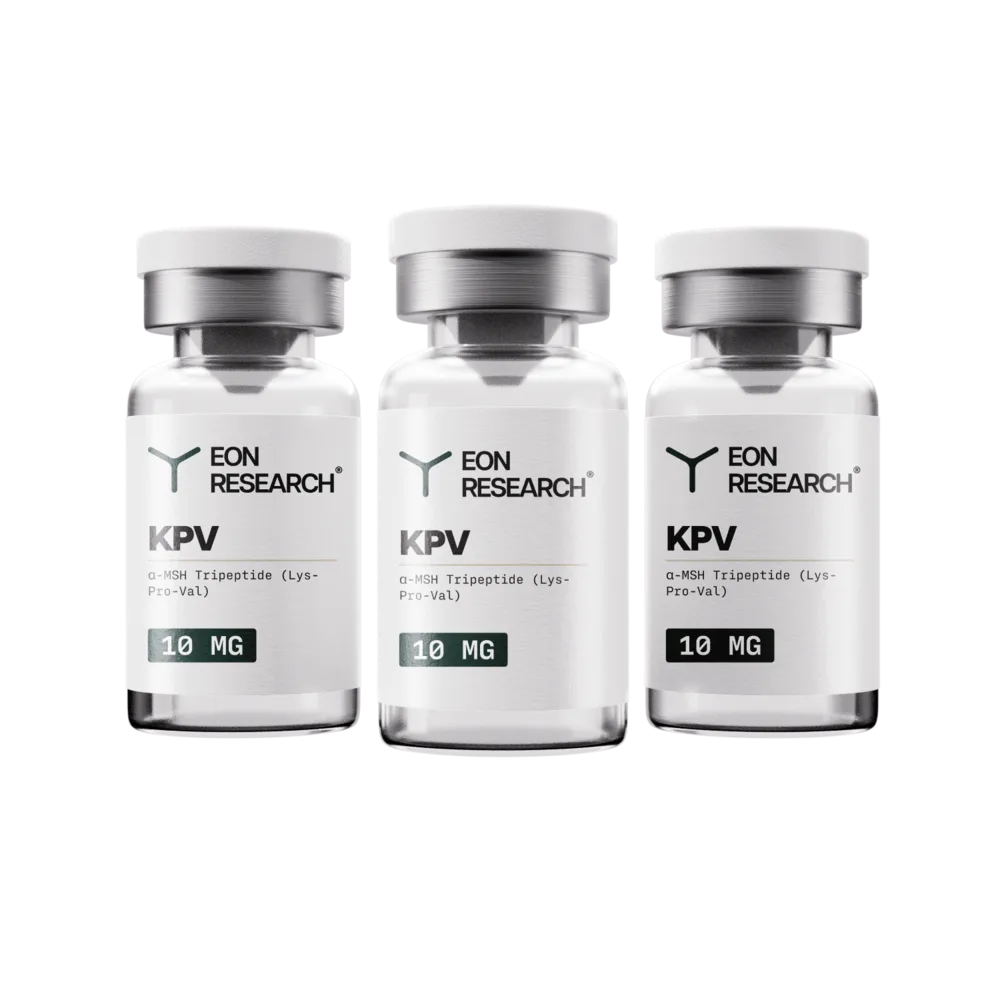
Alpha-MSH-derived tripeptide studied for anti-inflammatory, wound healing, and gut protection properties.
Research reading on immune
- What Is KPV? Anti-Inflammatory Tripeptide ResearchKPV is a three-amino-acid fragment of alpha-MSH studied in anti-inflammatory and NF-kB signaling models. Here's what it is and what it's studied for.
- What Are Research Peptides? A Beginner's GuideThe pillar overview: what research peptides are, how they're supplied and stored, and where the major research clusters fit — with links to every key guide.
Frequently asked questions
+What is thymosin alpha-1 studied for?
Thymosin alpha-1 is a 28-amino-acid peptide originally isolated from thymic tissue. It appears in the literature chiefly in T-cell maturation, immune-signaling, and host-response models.
+What makes LL-37 distinctive?
LL-37 is the only cathelicidin-family antimicrobial peptide found in humans. It is studied both for direct broad-spectrum antimicrobial activity and for its function as an immune signaling molecule that bridges innate and adaptive responses.
+How do thymalin and thymosin alpha-1 differ?
Thymosin alpha-1 is a single defined peptide sequence. Thymalin is a peptide preparation of thymic origin containing multiple fractions, which is why the two are often studied in parallel rather than treated as interchangeable.
+Are these products for human use?
No. All compounds are supplied as reference standards for in-vitro laboratory research only — not for human or veterinary use.
Related research topics
Researchers arriving at this collection are typically comparing immune peptides, thymosin alpha 1 research, LL-37 cathelicidin research, immune modulation peptide research. Each compound page carries CAS number, molecular formula, and per-lot third-party HPLC purity documentation.